A Complete Guide to School IT Audits
A school IT audit establishes a reliable view of your technology, evidence, risks and future investment needs.
A complete audit should examine more than hardware. It should consider infrastructure, cyber security, filtering and monitoring, digital leadership, asset lifecycles, service delivery, resilience and the school's ability to support teaching and operations.
What is a school IT audit?
A school IT audit is a structured review of the technology, systems, evidence and governance supporting a school or Multi-Academy Trust.
The audit records the current position, identifies risks and gaps, tests whether important controls are supported by evidence, and provides leadership with prioritised recommendations.
The output should not be only a technical inventory or a list of problems. It should explain what matters, why it matters, what should happen next and how improvement can be planned and funded.
Not every school IT audit answers the same question
The term "IT audit" is frequently used to describe entirely different processes. Understanding these differences is essential before commissioning or conducting a review.
Infrastructure audit
Reviews networks, wireless connectivity, switching, cabling, servers, storage, internet connectivity and technical resilience.
Cyber-security audit
Reviews accounts, privileges, devices, vulnerabilities, backups, recovery, incident response and security governance.
DfE standards assessment
Reviews the school's current position and evidence against the published DfE Digital and Technology Standards.
Filtering and monitoring review
Brings safeguarding, leadership and technical evidence together to review whether filtering and monitoring arrangements remain appropriate.
IT-service or MSP review
Reviews support responsibilities, service evidence, strategic advice, documentation, escalation and value delivered by an internal team or external provider.
Full strategic IT audit
Combines the technical, governance, asset, financial and service perspectives into one current-state baseline and improvement roadmap.
What should a school IT audit include?
1. Leadership and governance
Review:
- accountable leadership
- digital strategy
- decision-making
- risk ownership
- reporting to governors or trustees
- connection to the school-improvement and financial-planning process
2. Internet and connectivity
Review:
- current service
- capacity
- dependencies
- continuity
- filtering dependencies
- supplier and contract information
3. Networks and wireless
Review:
- switching
- wireless coverage and capacity
- cabling
- network management
- support status
- resilience
- diagrams and documentation
4. Cyber security and identity
Review:
- user accounts
- privileged access
- MFA
- security configuration
- patching
- supported software
- threat protection
- incident response
5. Filtering and monitoring
Review:
- ownership
- policy
- technical configuration
- annual review
- supervised testing
- escalation
- evidence and resulting actions
6. Backup, recovery and continuity
Review:
- data and system scope
- backup arrangements
- recovery ownership
- test results
- recovery dependencies
- business-continuity arrangements
7. Devices and asset lifecycle
Review:
- inventory accuracy
- assignment
- support status
- warranty
- condition
- usage
- lifecycle policies
- repair, replacement and retirement decisions
8. Cloud services and applications
Review:
- service ownership
- access
- data
- contracts
- duplication
- backup
- integration
- supplier dependency
- exit planning
9. IT support and service delivery
Review:
- responsibility
- support scope
- service levels
- documentation
- escalation
- recurring issues
- improvement planning
- strategic advice
10. Teaching, accessibility and user needs
Review:
- suitability of devices and services
- accessibility
- staff capability
- curriculum needs
- avoidable barriers
- training and adoption
11. Cost and future investment
Review:
- recurring costs
- contracts
- asset replacement
- known projects
- technical debt
- risk exposure
- budget dependencies
- phased investment
12. Evidence and reporting
Review:
- evidence quality
- ownership
- dates
- gaps
- confidence
- recommendations
- approvals
- progress monitoring
Who should be involved?
A school IT audit should not be completed by the technology provider in isolation. Technical specialists can supply evidence and advice, but leadership, safeguarding and financial decisions require the appropriate organisational owners.
| Participant | Contribution |
|---|---|
| Senior leadership | Objectives, ownership, risk and priorities |
| School business or finance lead | Contracts, costs, procurement and budgeting |
| IT lead or provider | Technical evidence, configuration and dependencies |
| DSL or safeguarding lead | Filtering, monitoring and online-safety context |
| Data-protection responsibility | Data-processing and information-governance context |
| Curriculum or teaching representation | User need, teaching impact and adoption |
| Governors or trustees | Oversight, challenge and accepted-risk assurance |
Exact responsibilities will vary according to local governance, employment arrangements and support contracts.
What evidence should be available?
Organisation and governance
- • digital strategy
- • current risk register
- • leadership ownership
- • relevant meeting and approval records
- • current improvement roadmap
Infrastructure
- • network diagram
- • switch and wireless inventory
- • internet-service information
- • cabling records
- • server and storage inventory
Security
- • asset and system register
- • privileged-access review
- • patching or security-update reporting
- • incident plan
- • recovery-test results
- • relevant staff-training records
Filtering and monitoring
- • latest review
- • provider information
- • testing evidence
- • roles and escalation
- • identified actions
Assets and finance
- • asset register
- • warranties
- • licence and contract register
- • support status
- • replacement assumptions
- • planned expenditure
Support
- • service specification
- • SLA
- • ticket reporting
- • escalation process
- • recurring-issue analysis
- • service-review records
Evidence Quality Note
A verbal assurance or an undated screenshot may help identify where to investigate, but stronger assurance normally comes from current, attributable and reproducible evidence.
What should a school receive after the audit?
A valuable audit should produce actionable outputs, not just a static document.
Executive summary
A concise explanation of the current position, material risks and decisions required.
Findings register
Each finding should identify the affected area, supporting evidence, impact and confidence in the conclusion.
Prioritised recommendations
Recommendations should distinguish immediate risk treatment, planned improvement, routine maintenance and accepted exceptions.
Asset and lifecycle exposure
Leadership should be able to see which replacement needs are likely to affect future budgets and which assumptions support the forecast.
Costed roadmap
Actions should be phased according to risk, dependency, affordability and organisational capacity.
Ownership and review points
Every approved action should have accountable ownership, a target review point and expected completion evidence.
Leadership reporting
Governors or trustees should receive a proportionate view of material risk, agreed investment and progress.
From audit to measurable improvement
audit
Establish the truth
Bring current assessments, asset information and evidence into one consistent baseline.
strategise
Decide what happens next
Prioritise findings, identify dependencies and turn recommendations into a phased, costed roadmap.
achieve
Evidence improvement
Structure actions, record progress and maintain a clear view of remaining risk and completed work.
A RAG score is only useful when the evidence is clear
Red, amber and green ratings can help leadership see patterns, but the colour alone is not the audit.
Each rating should be supported by:
- the assessment question
- the evidence reviewed
- the reason for the conclusion
- the risk or impact
- any dependency
- the recommended treatment
- the next review point
A green result should not remain green indefinitely without review, and a red result does not automatically mean immediate replacement.
How frequently should audits be reviewed?
There is no single review frequency that is appropriate for every part of a school's technology environment.
The full baseline should be reviewed at an agreed interval, while individual evidence should also be reconsidered when:
- guidance changes
- important technology is replaced
- a supplier or support model changes
- a significant incident occurs
- a school joins or leaves a trust
- material risks are identified
- financial assumptions change
- existing evidence becomes stale
The audit should therefore be treated as a maintained management process rather than a document produced and then filed.
Practical school IT audit resources
Download templates to help structure your school's IT audit process.
Keep your school IT audit current with asitplan
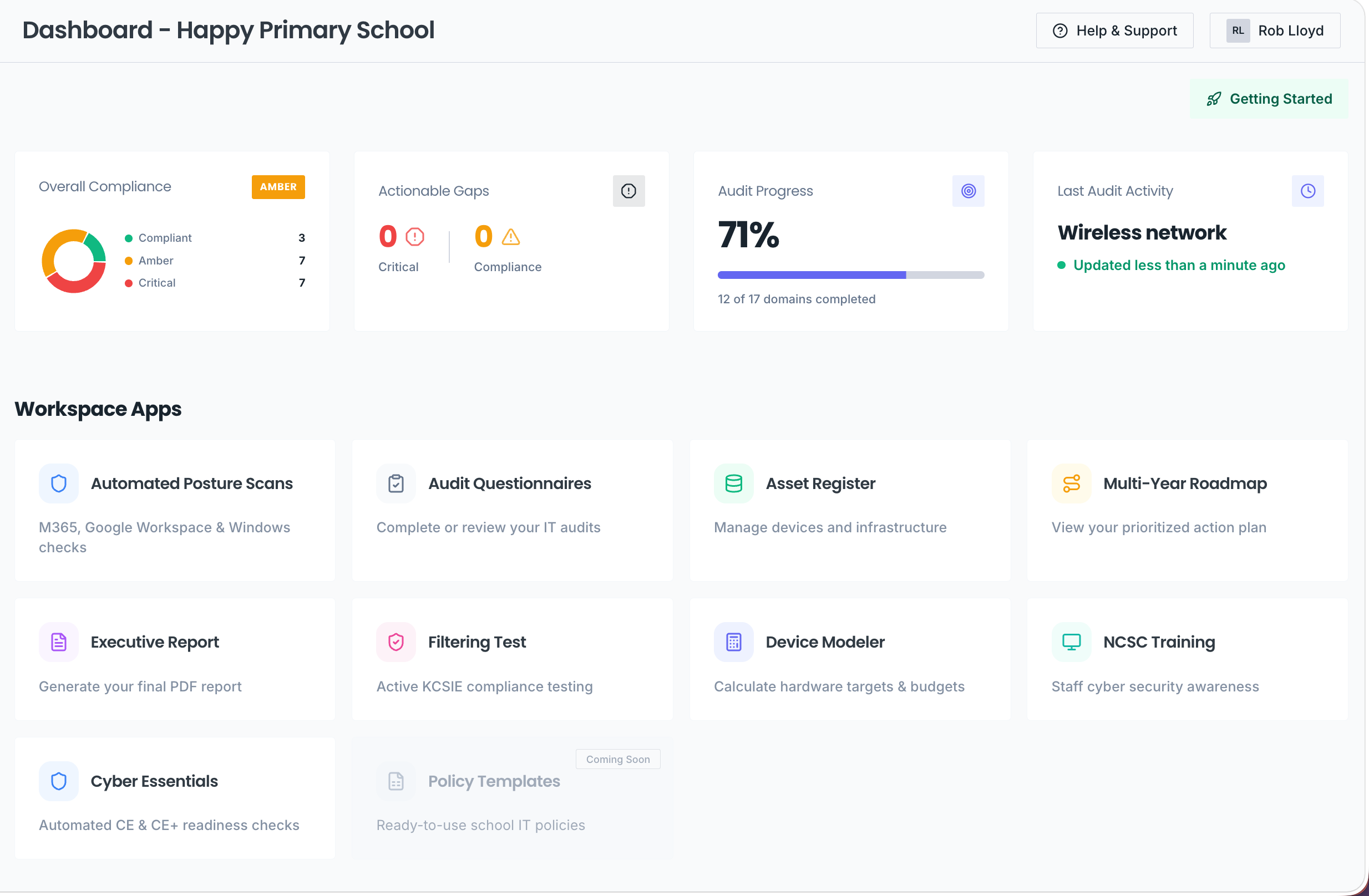
asitplan brings structured assessments, evidence, asset information and improvement planning into one platform.
Use the platform to establish the current position, identify gaps, organise recommendations and build a costed roadmap for leadership.
- structured questionnaires
- evidence capture
- RAG assessment
- framework mapping
- asset information
- lifecycle planning
- roadmap creation
- leadership reporting